Showing posts with label Animals. Show all posts

Saturday, August 15, 2020

Outgoing Mail: August


~~~
I am continuing to share about the Fruit of the Spirit. I am using Creative Faith & Co.'s Produce in Me devotional. The lessons are available in Spanish and in English, and have cute printables that can be attached! This month's topic was Goodness.


Dear Friend,

The next fruit of the Spirit that we are looking at is Goodness! Hillary Krippaehne writes:
"I just returned from a week long mission trip with the youth from my church. I have never led a mission trip before, let alone one in another country. Each morning I woke up at the crack of dawn to make and set out breakfast. We hosted a Vacation Bible School camp during the day, then activities with the local youth group each night. I have never been so exhausted in my entire life. Each day we received letters from our prayer partners in the United States. One day, I did not think I could continue with the long hours serving. Then, I opened up a card to find the most perfect verse.

Read Galatians 6:9.
I was tired of serving. I was tired of “doing good,” but a fruit of the Holy Spirit is goodness. When we are full of God, we will not become weary in doing His good work.

Read Matthew 7:16-18.
The Bible very clearly talks about goodness in relation to fruit in these verses. If you are running with the Lord, your tree will be beautiful and healthy and full of yummy, good fruit.

Heavenly Father, help us not grow weary in doing good. Fill us up with Your goodness each day. Help us to bear good fruit, fruit that is pleasing and delicious for You. Thank You for the opportunities we have to serve and work alongside You. In Jesus’ name, amen.

Going deeper:
 What kind of fruit is on your tree? How will people recognize you by your fruit?
 Read Hebrews 10:24. God doesn’t want us to be alone in doing good for Him. Who can you spur on toward good deeds?
 Read Luke 19:17. Could God call you a good and faithful servant? Why or why not?
 Draw a cup of your favorite fruit juice to remind you to be full of God’s goodness."

Do you have a story of when someone was good to you? How have you been able to serve the Lord and do good? I would love to hear your stories!

Love,
Hannah

I included the illustration that goes along with the lesson and a coloring page.


~~~

Along the theme of writing about José and Mateo's favorite animals, I wanted to share about camels, and thought the kid would really enjoy this devotion from Indescribable.


Dear Name,
Today I wanted to share a devotional about José's other favorite animal, the camel! José dreams of one day riding a camel, and when he learned that they can run quickly, he now says he hopes to ride a fast camel! This devotional is by Louis Giglio, and I hope it encourages you!
"Lord, you are our father. We are like clay, and you are the potter. Your hands made us all. Isaiah 64:8.
There are some pretty interesting [...] animals in God's creation. One of them is the camel. With its thick, busy eyebrows, long eyelashes, hump on its back, and big, floppy feet, the camel is not exactly the world's cutest creature. But everything about it was perfectly planned and created by God to help the camel live in the desert.
That big hump? Most people think it stores water, but it actually stores fat. That big hump of fat lets the camel go up to a week without drinking water during the super, and it can go even longer without eating. You know how? The camel can burn the fat in its hump for both energy and water. So what about those busy eyebrows and long eyelashes? They keep out the desert sand. Camels can even close their nostrils to keep out the sand. And those big, floppy feet? They're prefect for traveling long distances on shifting sands.
Yes, camels were perfectly planned and created to live in the desert. Just as fish were perfectly created to swing through the trees. And you were perfectly created to be...you. Just as a potter shapes the clay into the vessel she wants to make, God make you with a plan and for a purpose--to love Him and to love others. And He gave you special talents and abilities so you could live out His purpose for you--in a uniquely you kind of way that no one else can do. God is the perfect Creation, and He created you according to His perfect plan!
Lord, I know that I am Your creation, and You designed me just the way You wanted me to be. Please show me that talents You've given me, and help me to use them in ways that make You smile and help others see You.
Baby camels are born without any humps at all. Camels with one hump are called Arabian (or dromedary) camels. They live in the Middle East. Camels with two humps are called Asian (or Bactrian) camels. They live only in China and Mongolia."
Do you have camels where you live? Have you ever seen a llama? Llamas are part of the camel family, but they don't have humps and live in South America. God made llamas specially able to live at high altitudes!
Sending much love,
Hannah

I included images of camels (thanks to Google images), and I attached a coloring page and verse image.


~~~

I was due to reply to my kids' letters, and I wanted to share photos of our new ferrets!


I also have been saving fun free paper dolls from Paper Dolls by Cory and mazes from Disney, so I have two versions of the letter, one for boys and one for girls.


~~~

Happy Writing!

Saturday, July 11, 2020

Outgoing Mail: July


~~~
I am continuing to share about the Fruit of the Spirit. I am using Creative Faith & Co.'s Produce in Me devotional. The lessons are available in Spanish and in English, and have cute printables that can be attached! This month's topic was Kindness.


Dear Friend,

The next fruit of the Spirit that we are looking at is Kindness! Hillary Krippaehne writes:
"In high school my friends and I had a saying ... Random Act Of Kindness. We would take turns doing kind things for people throughout the week. It was and is amazing to see how God can take a small act of kindness and use it to touch the lives of others. Job 6:14 reminds us to not withhold kindness from our friends. I have a slight pineapple obsession. Last year I learned pineapples are a symbol of hospitality, which reminded me of a story in the Bible.

Read Luke 10:30-37.
Jesus asks a question in verse 36. He says, which of these people was a neighbor? The neighbor was the one who showed kindness and mercy. How are we treating our neighbors?

Read Isaiah 63:7.
We are to show kindness to others because our Heavenly Father is so very kind to us. We constantly disobey Him and let Him down, yet He constantly forgives us and showers us with blessings, compassion, and kindness. He is such a sweet God.

God Almighty, thank you for your kindness to me. I do not deserve it, but you are full of mercy and kindness. Help me to not withhold that kindness from others. Help me to seek opportunities to bless those around me. Give me the energy and strength to do all the things You put on my heart. In Jesus’ name, amen.

Going deeper:
 Who are your neighbors? Draw your neighborhood and explain how you are showing kindness where God has planted you.
 Read a story in the Bible of someone showing kindness, like David to Saul (1 Samuel 24), or Rebekah to Abraham’s servant (Genesis 24). What can you learn from his or her story?
 Read and illustrate Romans 12:13.
 Draw a pineapple to remind yourself to be sweet to those around you! Brainstorm a list of random acts of kindness you can do to bless others."

I would love to hear how you bless those around you with acts of kindness. Please write and tell me your stories!

Love,
Hannah

I included the illustration that goes along with the lesson and a coloring page.


~~~

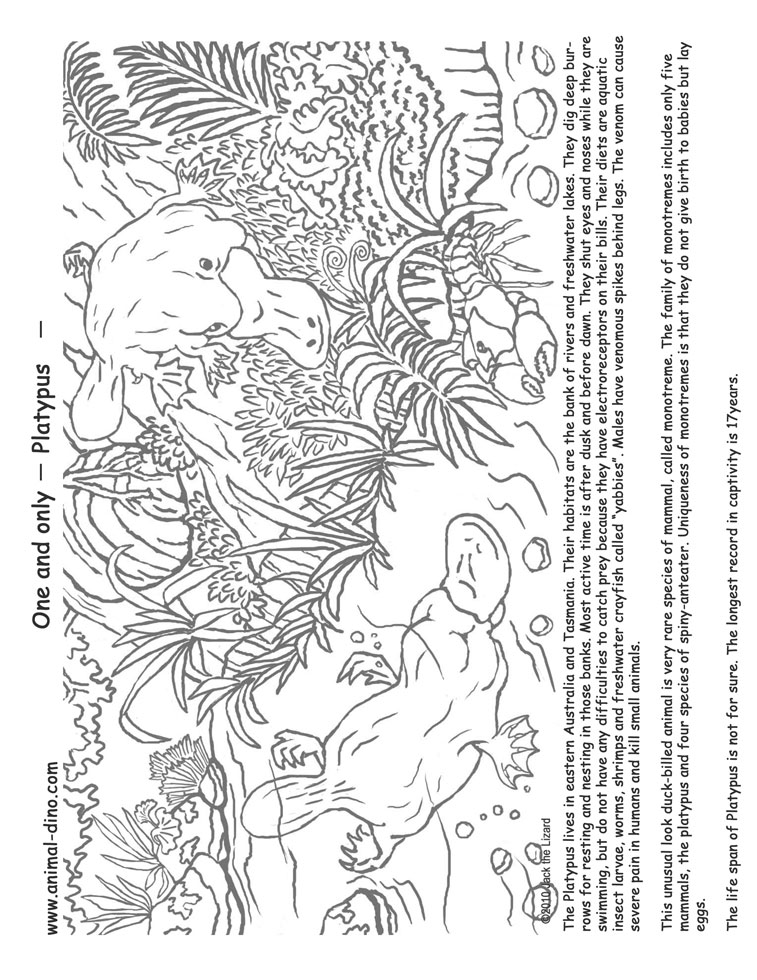
In addition to replying to any letters that we received, I also wrote about Mateo's favorite animal, the duckbill platypus! I shared photos and information from Nat Geo Kids.


Dear Name,

How are you? How is your school year going? We send our love to you and your family! Mateo's favorite animal is the duckbill platypus, so I wanted to send you a letter about this animal! Mateo loves to pretend he is a baby platypus hatching out of an egg. He was extra excited to be in Puggles in Awana (a Bible class that meets at our church) because the Puggles class wears shirts with a platypus on it. I included a photo for you to see!

The platypus lives in Australia, and they are one of the few mammals that lays eggs! National Geographic writes this about the platypus:
"Duck-billed platypuses are small, shy animals. They have a flattened head and body to help them glide through the water. Their fur, dark brown on top and tan on their bellies, is thick and repels water to keep them warm and dry even after hours of swimming.
The duck-billed platypus's head and body grow to about 38 centimeters and its tail grows to about 13 centimeters long. Their most remarkable feature is their amazing snout. It looks like a duck's bill, but is actually quite soft and covered with thousands of receptors that help the platypus detect prey.
Males are also venomous. They have sharp stingers on the heels of their rear feet and can use them to deliver a strong toxic blow to any foe.
These mammals are bottom feeders. They scoop up insects and larvae, shellfish, and worms in their bill along with bits of gravel and mud from the bottom. All this material is stored in cheek pouches and, at the surface, mashed for consumption. Platypuses do not have teeth, so the bits of gravel help them to "chew" their meal."

Love,
Hannah

I also found a platypus coloring page to include.


~~~

Happy Writing!

Saturday, June 6, 2020

Outgoing Mail: June


~~~
I am continuing to share about the Fruit of the Spirit. I am using Creative Faith & Co.'s Produce in Me devotional. The lessons are available in Spanish and in English, and have cute printables that can be attached! This month's topic was Patience.


Dear Friend,

The next fruit of the Spirit that we are looking at is Patience! Hillary Krippaehne writes:

"Raise your hand if you love [waiting]! Recently I moved out of my parent’s house and into a place farther away from the church where I work. I now sit in my car for double the amount of time each day. Since it is summer in Oregon, road work happens everywhere, causing endless traffic jams and waiting.

Instead of getting frustrated, upset, and mad while I am stuck in the car, I decided to turn those times into a special moments of prayer. I turn the music off, and simply talk to God. He takes away the frustrations of waiting, and I get to spend beautiful time with Him on the road.
When I see the orange cones and signs saying, “Road work ahead,” I realize it is God performing some major construction on my heart as He teaches me how to wait with patience. P.E.A.R. = Patience empowers all relationships

Empowers means to give authority or to allow, and it also means to make stronger or more confident.
Patience allows our most important relationship with God to become more confident and powerful. We have a stronger relationship with Him when we have patience to wait for all He is doing in our lives. Patience also allows our relationships with those around us to improve. When we have patience in our relationships with family and friends in patience, God is glorified.

Let us pray: Heavenly Father, give us Your divine patience in our relationships. Help us to have patience in waiting for all You are doing in our lives. Thank You, Lord, for your patience with us. In Jesus’ name, amen.

Going deeper:
 Read Psalm 25:4-5. Draw a picture of your car to remind you to have patience as God reveals the next road you are supposed to follow.
 Read and journal Ephesians 4:2. How can you put that verse into practice today?
 What fruit takes patience to eat? Grab that fruit for a snack today and reflect on where God is asking you to have patience in life right now."

Love,
Hannah

I included the illustration that goes along with the lesson and a coloring page of James 1:4.


~~~

José's favorite animal is a snow leopard, so that inspired this letter's theme! The information and photos of snow leopards came from Nat Geo Kids. I also left some room to reply to letters that our kids sent to us.


Dear Name,

José's favorite animal is the snow leopard. There are leopards that live in Africa, but snow leopards live in Central Asia, in cold, mountainous areas like the Himalayan mountain range.

National Geographic shares a few fun facts about these amazing animals:
1. Using their superstrong legs, they can leap up to 50 feet. They’re also into power walking—some travel distances of over 25 miles in one day in search of food.
2. Temperatures in parts of Central Asia where these cats live can drop to minus 20˚F in winter. Luckily a snow leopard’s tail is like a built-in quilt. The cat can wrap its three-foot-long fluffy tail around its body for warmth.
3. Snow leopards are masters of camouflage. Their spotted coats turn off-white in winter to match the snow. In summer the fur changes to a yellowish gray so the cats can blend in almost completely with the surrounding mountains and blooming plants.
4. Female snow leopards give birth to two or three cubs at a time in dens hidden in caves or rock crevices. To make these “nurseries” extra cozy, moms line the hideout with their fur.
5. Oxygen is scarce in the snow leopard’s mountainous habitat. But the feline has powerful lungs and a large chest cavity to gather as much oxygen as possible when it inhales. Its wide nose also warms air before it enters the lungs.

What animal would you like to learn about? What have you been learning about in school?

We send you much love from our family!

Hannah

While searching for a snow leopard coloring page, I also found a beautiful snow leopard drawing to share with the kids!


~~~

I was due for a reply letter (I aim to respond to each of my kids' letters every-other month, but got slightly off schedule with handwriting letters in May). Along with this reply letter, I am sending photos of my family and a scavenger hunt! (I will send a short version of this letter to kids who haven't written).


~~~

Happy Writing!

Saturday, April 11, 2020

Outgoing Mail: April


~~~
Due to the current situation with Covid19 (you can check the handy dashboard to see how it is affecting each Compassion country), I wanted to send a letter sharing an encouraging devotional from Indescribable.


Dear Name,
Compassion has been keeping us updated on how Bolivia is being affected by the Coronavirus and how the Compassion churches are helping their communities. Please know that we are praying for you and for your family, for God's protection and peace during this time. The kids and I recently read a very encouraging devotion by Louie Giglio, and we wanted to share it with you.
✬ ✬ ✬ ✬ ✬ ✬ ✬ ✬ ✬ ✬ ✬ ✬
The Supreme Survivor: "Don't worry, because I am with you. Don't be afraid, because I am your God. I will make you strong and will help you. I will support you with my right hand that saves you." Isaiah 41:10
The tardigrade, or water bear, isn't a bear at all. Rather, it's a tiny little invertebrate that lives in moss, on plants, in sand, in freshwater, and in the sea. Tardigrades are among the few animals that can be found both on the highest mountains and in the deepest seas. These tiny creatures are only about 1.5 millimeters long, but the tardigrade is fierce. Its mouth is full of daggerlike teeth, which it uses to tear into algae and other tiny animals.
These tough little creatures can live in boiling water and in the deepest trenches in the oceans. They can survive for more than 10 years without a drop of water. Scientists in Japan even froze a couple of tardigrades for 30 years--and even when thawed out, they were still alive! God gave this little creature--that you've probably never heard of--everything it needs to survive!
And how much more will God do for you, His most prized creation? In this world, you'll face troubles, temptations, and fears so fierce you might think you can't survive. But you can because God is on your side. There's no trouble He can't handle (Matthew 19:26). There's no temptation He can't help you defeat (1 Corinthians 10:13). And there's no need to worry or fear (Matthew 6:25-34) because He will give you everything you need not only to survive, but to thrive, as His treasured child. God created you to be an extreme survivor, and He's with you no matter what the conditions."
✬ ✬ ✬ ✬ ✬ ✬ ✬ ✬ ✬ ✬ ✬ ✬
I included photos of tardigrades so you can see what they look like!
My dear Name, I hope that you remember during this time to call out to our Lord for His help and strength. He loves you dearly, and we love you too! Please be praying for Eric, since he is a nurse he is caring for patients who are sick with Coronavirus. He sends his love and a photo with his mask for you to see! Rosi, José, and Mateo have been dressing up and pretending to be nurses and doctors, and I thought you'd enjoy the photos. Juanito says hello too!
Much love,
Eric & Hannah

I included images of the tardigrade (thanks to Google images) and photos of Eric and the kids with their nursing gear.


~~~

I wanted to take time to say Happy Easter and share a John Piper devotional called Jesus Keeps His Sheep. I used different templates for younger and older kids.


Happy Easter Name!

As we celebrate Easter, I wanted to share this John Piper teaching that really encouraged me. I pray that it encourages your soul as you think about Christ's death to save us!
“Simon, Simon, behold, Satan demanded to have you, that he might sift you like wheat, but I have prayed for you that your faith may not fail. And when you have turned again, strengthen your brothers.” (Luke 22:31–32)
Though Peter, in fact, failed miserably, by denying Jesus three times, the prayer of Jesus preserved him from utter ruin. He was brought to bitter weeping and restored to the joy and boldness that showed itself in Peter’s message at Pentecost. Jesus is interceding for us today in the same way that our faith might not fail. Paul says this in Romans 8:34.
Jesus promised that his sheep would be preserved and never perish. “My sheep hear my voice, and I know them, and they follow me. I give them eternal life, and they will never perish, and no one will snatch them out of my hand” (John 10:27–28).
The reason for this is that God works to preserve the faith of the sheep. “He who began a good work in you will bring it to completion at the day of Jesus Christ” (Philippians 1:6).
We are not left to ourselves to fight the fight of faith. “It is God who works in you, both to will and to work for his good pleasure” (Philippians 2:13).
You have the assurance of God’s word that, if you are his child, he will “equip you with everything good that you may do his will, working in us that which is pleasing in his sight, through Jesus Christ” (Hebrews 13:21).
Our endurance in faith and joy is finally and decisively in the hands of God. Yes, we must fight. But this very fight is what God works in us. And he most certainly will do it, for, as it says in Romans 8:30, “Those whom he justified he also glorified.” The glorification of God’s justified children is as good as done.
He will lose none of those he has brought to faith and justified."

I also wanted to share these cute photos that were taken by the Austrian photographer Julian Rad. Austria is in Europe near Germany, and he likes to take photos of the wildlife outside of his home!

Please send our Easter greetings to your family! Jesus is risen!

Love,
Hannah

And I also wanted to include some really fun wildlife photos by the Austrian photographer Julian Rad! These are some samples of the photos I sent to the kids! I made two different versions.


~~~

Happy Writing!

Saturday, October 19, 2019

Outgoing Mail: October


~~~
It was time to reply to our kids again! I enjoy sharing our daily lives with the kids, like discovering baby armadillos, picking muscadine grapes, and admiring beauty berries! I also shared a little about armadillos, because many of our kids are fascinated with our local wildlife.


~~~

I like to have a birthday theme for the year, and encourage the kids with a specific message. This year I am building off of Creative Faith & Co.'s Heavenly Father devotional. The lesson is available in Spanish and English. I will be sharing soon how this ties into my 2020 Birthday Theme!


Did you know that God is our Heavenly Father? Even if someone doesn't have a loving Father on earth, we can know that God is our Father and aways watching over His children. This lesson by Diana says:
"We have a God who is our Heavenly Father. And He is a perfect Dad. It doesn’t matter if we have a good dad here on earth or not, God loves us so much more than any person can. There are many characteristics of God that show He is our perfect Father, but here are four. Do you believe that God is your Father? What characteristics of God do you notice that show He is a perfect Dad?"
1) God my Loving Father. Read Isaiah 64:8.
God is our Father, and we can draw close to Him with much confidence, and even call Him “Daddy.” God wants us to have this type of relationship and confidence with Him, the confidence that we know He loves us. If you for some reason didn’t have a dad in your home that loved you, you need to know that you have a God in heaven that takes care of you. A God who is love.
Read 1 John 4:8. A dad who loves you supplies all your needs including your need for love.
Read Philippians 4:19. Be careful where you look to satisfy your need for love, because sometimes we can look in the wrong places. If you go into the arms of your Heavenly Father and surrender to Him, you will be completely satisfied because He loves you like no one else can. You can run like a child into the arms of your Dad. You will see how He will fill your life with love until it overflows.
Going Deeper:  Can you sit with Father God with confidence and receive His love?  Read Matthew 7:11. Draw a present to represent the incredible gift we have, the love of God.
2) God my Protector.
How many times in your life have you been in the middle of overwhelming situations and you need a God who defends? Our Heavenly Father has promised that He will defend you in the middle of all circumstances. You can take Him by the hand and ask Him for help, like a little child.
Read Psalms 68:5-15. God is the Father of orphans and the defender of widows.
When you are overwhelmed, don’t run to your best friend, don’t look for help in worthless idols that are not able to save you. Remember that you have a God who protects His children, including you. Don’t be scared of your enemies, because your Heavenly Father will defend you and stand by your side. Read Psalms 138:7.
Going Deeper:  Draw a house to represent God protecting you every day.  What war or battle are you in right now? How do you think God can help and protect you in the middle of those difficult circumstances?"
Parts 3 & 4 of the lesson are attached =)


~~~

Happy Writing!

Saturday, September 14, 2019

Outgoing Mail: September


~~~
I shared To God Be the Glory. I compiled quotes from Hymnary and from Hymns for a Kids' Heart.


Greetings in our Lord Jesus Christ!
I want to share another story with you, about a hymn called "To God be the Glory." Bobbie Wolgemuth writes:

"Can you imagine what it would be like if you couldn't see? Being blind is like living every day in the dark. Once there was a sweet blind girl who lived her whole life in darkness; yet she kept smiling. She had heartaches that would make almost any other girl unhappy. But not this special young lady. Her name was Frances Jane Crosby... Frances was born in 1820 to a loving couple who lived on a farm in New York. They liked to call their healthy baby girl "Fanny." When she was only six months old, Fanny became very sick, and her parents were not able to reach the local doctor. Without knowing it, they let someone pretending to be a doctor put the wrong ointment on her eyes and Fanny became completely blind. Something else terribly sad happened before Fanny was even old enough to talk. Her daddy died. Fanny's mother had to take a job as a maid. Fanny's grandmother, Eunice, bravely accepted the task of training and caring for baby Fanny. Both her mother and grandmother asked God for the strength they would need to guide Fanny as she grew up without eyesight and a daddy.
Grandmother Eunice took Fanny on long walks in the fields around the farmhouse, letting the little girl smell the meadow flowers and touch their soft petals. Nearby, she could dangle her feet in the cool water and hear the trickling brook. Fanny loved the friendly songs fo the birds and swoosh of the wind blowing leaves on the huge trees...Even without eyesight, young Fanny was filled with delight just listening and touching everything.
Listening to her grandmother's voice read hour after hour from the Bible, great classics, and poetry was Fanny's highest joy...Speaking phrase after phrase, young Fanny learned to memorize huge portions of the bible...When Fanny was only ten years old, she had memorized most of the New Testament!
At the new school for the blind, Fanny's talents blossomed. She learned to play the organ, piano, guitar, and harp...Because she was able to remember all the bible stories and verses she had memorized as a child, she wrote over nine thousand hymns and poems in her life...Fanny was quick to tell everyone where her smile came from. That's why she wrote the song, "To God be the Glory." She wanted everyone to know who had answered her prayers...Now it's your time to tell someone the reason for your joy."

Much love,
Hannah

The sheet music is from Hymnary, and if you would like a copy of the text, I made my Canva hymn file shareable.


~~~

I love sharing stories with our kids, and so I thought I'd share the Three Little Pigs and a remake of the story that my own kids love! I also shared a bit about Javelina, thanks to the Arizona-Sonora Desert Museum.


My sweet Friend,
Have you heard the story of the Three Little Pigs? This is a common folktale in my country, and tells of three pigs building houses. One builds with straw, another with wood, and another with bricks. The wolf comes and blows the straw house down, and the pig runs to the wood house. The wolf blows that house down, and then both pigs runs to the third house, which the wolf can't blow down because it's made of bricks. My kids enjoy this story, and José likes to pretend he's a little pig with his brothers and sister and they ask me to be the "bad wolf." Many times authors will take a common folktale, and make it a little more fun by changing the details up a little bit.
My kids love a remake of the Three Little Pigs called "The Three Little Javelinas" by Susan Lowell. In this version, the Javelina brothers are lazy, but not the sister. One brother builds a home out of tumbleweeds, and the other brother builds his house out of saguaro cactus ribs. The sister builds her home out of adobe bricks. It takes her a long time to build her home! Then Coyote comes and wants to eat the Javelina. Coyote says, "I'll huff, and I'll puff, and I'll blow your house down!" Coyote blows down the tumbleweed home, and the first Javelina runs to his brother's saguaro rib home. Coyote blows down that home, and they both run to their sister's home. Coyote can't blow down her home, so he tries to crawl down the chimney, but she lights a fire, and Coyote runs away squealing and howling and he never bothers the Javelina ever again!
Javelina can be found from the southwest United States (including Texas, where Eric's brother lives) to northern Argentina! The Arizona-Sonora Desert Museum says, "Javelina have a scent gland on the top of their rump covered by long hairs. They will rub their scent on rocks and tree stumps to mark their territory... Javelina are not pigs...Javelina are medium-sized animals that look similar to a wild boar. They have mainly short coarse salt and pepper colored hair, short legs, and a pig-like nose. The hair around the neck/shoulder area is lighter in color giving it the look of a collar. Javelina have long, sharp canine teeth which protrude from the jaws about an inch." We also learned that Javelina can eat prickly pear cactus and rattle snakes! And they live in groups, and when threatened, one Javelina will lay down it's life and die to save the rest of the group!
I included photos of Javelina, and some of the book illustrations by Jim Harris for you to enjoy with the story! What is a common folktale that you know? I would love to hear the story! And if you re-wrote the folktale, how would you change it?
Love,
Hannah

I found the Javelina photos through a Google Images search.


~~~

Happy Writing!

Saturday, July 13, 2019

Outgoing Mail: July


~~~

My parents visited Russia and had a great time there! So I thought I'd share some of their trip photos with our kids, along with a Russian folktale, Clever Katya.


I wanted to share a Russian folktale with you. ~~~
Once upon a time, in a village in Russia, there were two brothers. Dimitri was rich and Ivan poor, but they both kept horses. One day, Dimitri was riding a fine white stallion and Ivan was riding a little brown mare. The mare had a pretty dappled foal, and greedy Dmitri claimed that the foal was his horse. Ivan disagreed, and they brought their disagreement to the Tsar, who was clever and had a sense of humor. He said that whichever brother could correctly answer his riddles could keep the foal.
"What is the fastest thing in the word, what is the fattest, what is the softest, and what is the most precious?" asked the Tsar. Dmitri consulted his neighbor, who said the fastest thing was her husband's mare, the fattest was their pig, the softest was a quilt she had made and the most precious was her grandson. Ivan meanwhile went home and asked his wise daughter Katya, who had come to love the foal. Katya said, "The fastest thing is the wind that rushes over the Steppes. The fattest is the earth, which feeds everyone and everything on it. The softest is a child's caress...And the most precious is honesty." The Tsar was pleased with Katya's answers, and said that Ivan could keep the foal if he brought Katya to his palace in a week so he could meet this wise girl. However the Tsar demanded that if Ivan wanted to keep the foal, then he must fulfill the Tsar's request, "She must be neither on horseback nor on food, neither naked or dressed, and neither bringing a present nor empty handed."
Ivan was worried, but Katya did not see this as a challenge too hard. When the week was up, clever Katya rode into the Tsar's court, sitting on the back of a hare. She was wearing a fishing net, instead of clothes. And she held a partridge bird in her hand. The Tsar asked, "Is that a present for me?" "Take it," said Katya simply, releasing the partridge. The Tsar was intrigued and asked, "What do you and your father live on?" "Why, on the hares like these that father catches in the river and the fist I trap in the trees with this net I'm wearing," said Katya. "That's absurd!" said the Tsar. Katya modestly replied, "Not as absurd as a stallion giving birth to a foal, Your Majesty." The Tsar laughed, concluded Katya was the most clever girl in the kingdom, and asked to marry her! She agreed.

~~~

I enjoy sharing about animals with our kids, and I got some fun photos of Rosie feeding giraffes when we went to the zoo in January. So I thought I would take some time to share about giraffes! I got the information from National Geographic Kids and the coloring page thanks to a Google Images search.


Dear Friend,

Rosie's favorite animal is a giraffe! As a school field trip, we were able to visit the zoo! And Rosie was allowed to feed the giraffe! What is your favorite animal?

National Geographic Kids shares these 10 facts about giraffes:

1) Giraffes are found in the dry savannas of Africa, where they roam among the open plains and woodlands.
2) Well known for their long necks, these gentle giants are the world’s tallest living land animals. An adult male can grow to around 5.5m – that’s taller than three adult humans!
3) A giraffe’s height is helpful for keeping a look out for predators, such as lions and hyenas. Their excellent eyesight allows them to spot hungry beasts from far away, too.
4) Herbivores, giraffes only eat plants. Their favourite grub is the acacia tree, and they use their long necks to reach the leaves and buds in the treetops. Their long tongues (which grow to a whopping 53cm!) also help them pull down leaves growing way up high.
5) And boy do these guys have an appetite! They spend most of their time eating, and can guzzle up to 45kg of leaves and twigs a day!
6) Whilst they may eat a lot, giraffes don’t drink much water. This is because they get most of their water from their leafy meals, and only need to drink once every few days.
7) Giraffes are very social animals and roam around in groups. These groups, called towers, typically have around 15 members led by an adult male. The other members are females and young males.
8) To see who is stronger, males (called bulls) fight by butting their long necks and heads. This is known as “necking“. These fights aren’t usually dangerous, and end when one bull admits defeat and walks away.
9) Female giraffes give birth standing up. The result? Newborns are welcomed to the world with a 1.5m drop to the ground! Ouch! But these infants are quick to get on their feet – within 30 minutes they are standing, and only hours later they”re able to run with their mothers.
10) In the wild these beautiful creatures live for around 25 years. In captivity they live longer, and have been known to reach 40 years old.

I am praying for you! We love to walk near our home and see all the cool insects and pretty flowers and fun animals. God's creation is so beautiful!

Love,
Hannah


~~~

Happy Writing!

Saturday, April 14, 2018

Outgoing Mail: April


Life has been increasingly busy between my older two kids needing more attention for our "school" and the younger two getting into more, my husband is in graduate school (as well as working full-time), my translating has increased for Manna 4 Lempira (which is wonderful!) and I have started volunteering for a local ministry. All this to say, I've decided to write one form letter to our Compassion kids per month, in addition to responding personally every-other month. And I might be blogging less, but I still hope to share letters as I send them.

~~~

This month I shared about owls! My friend Helen sent me some beautiful barred owl photos, and gave me permission to share them with our kids. The basic owl information came from Science Kids, the barred owl info is from BioKIDS, and then the USA owl guide photos are from Owling.


Hi Friend!

How are you and your family? We are doing well here, Eric is almost finished with his first semester of his master's program. He still has two years to complete the program, but we are thankful that his first semester ended well!

My friend Helen loves to take photos of birds, and she sent me these amazing photos of a Barred Owl. I wanted to share them with you and also share a little about owls! There are over 20 types of owl in the USA! I included a photo guide for you to see the various kinds. Do you have owls in your country? Here are some basic facts about owls:
"1. There are around 200 different owl species.
2. Owls are active at night (nocturnal).
3. A group of owls is called a parliament.
4. Most owls hunt insects, small mammals and other birds, some owl species hunt fish.
5. Owls have powerful talons (claws) which help them catch and kill prey.
6. Owls have large eyes and a flat face.
7. Owls can turn their heads as much as 270 degrees.
8. Owls are farsighted, meaning they can’t see things close to their eyes clearly.
9. Owls are very quiet in flight compared to other birds of prey.
10. The color of owl’s feathers helps them blend into their environment (camouflage)."

Barred owls are one type of owl that live in the USA, my country. BioKIDS says, "Barred owls are large, round-headed, woodland owls with grey-white faces. The plumage is grey-brown with buff-white edges and brown bars on the wings. Barred owls have brown eyes and lack ear tufts. Barred owls are arboreal, living in coniferous forests near water sources, and wooded swamps. Including pine, spruce, fir, and cedar forests. They require dense foliage for daytime roosting, and large trees with cavities for nesting. Barred owls are mainly nocturnal hunters, although they may be active during the day. Barred owls live alone for most of the year, only living in family groups from the breeding season until the young leave the nest. Barred owls are very vocal species with an easily recognizable 9 syllable call; "Who cooks for you? Who cooks for you-all?", called a two-phrase hoot."

In closing I'd like to share Isaiah 43:20, a beautiful verse that reminds us of God's care and how even the wild animals, like owls, honor God! "The wild animals honor Me, the jackals and the owls, because I provide water in the wilderness and streams in the wasteland, to give drink to My people, My chosen," Isaiah 43:20.

Love, Hannah


~~~

Happy Writing!

Saturday, February 10, 2018

Outgoing Mail: February


~~~

I am back into my hymn series! This month I am sharing This is My Father's World. I compiled quotes from Hymnary and from Hymns for a Kids' Heart. (And don't you love the new template that is available?!)


My dear friend,

Before we start school for the day, we take time to read a Bible story, pray for you, and sing to God! I really enjoy singing old hymns (as well as new worship songs), and I have enjoyed sharing some of our favorites with you. Today I would like to share "This Is My Father's World." This beautiful hymn always reminds me of God's incredible creativity, and brings Psalm 8:3-4 to mind. I hope you enjoy this hymn! Maybe you can find someone at your project who can play the song for you!

John Julian shares, "Babcock, Maltbie Davenport, was born at Syracuse, N.Y., Aug. 3, 1858. Graduating from Syracuse University, he was ordained to the Presbyterian Ministry and was pastor of churches in Lockport, N.Y., Baltimore, and N.Y. City. He died at Naples, Italy, May 18th, 1901. He was richly gifted, and his short career was memorable for the extraordinary influence of his personality and his preaching."

And Bobbie Wolgemuth writes, "Maltbie Davenport Babcock [...] was talented in almost everything he did. He was a star swimmer and a good baseball pitcher. He was always winning sports contents... But there was much more to Maltbie than strong muscles. He had confidence and always tried to do the right thing... Maltbie was also a young man who loved music. He enjoyed singing and was a leader of the boys' choir and the orchestra at school. There was something else that made Maltbie very happy. He noticed beauty in the world around him. Music filled his mind as he walked in the woods and listened to the birds. The sights and sounds filled his heart until it overflowed with joy. One day he wrote a song about the splendor that he saw and heard. The hymn he wrote was "This Is My Father's World." [...] The unusual boy with the unusual name spent his whole life sharing the joy of God. Maltbie knew that God had made the world and everything in it. Maltbie wanted everyone he met to enjoy all the beautiful things God had made--the mountains, skies, forests, and especially the sea... Today you can listen and look for all the sounds and sights that show God's creativity. Your own voice is part of the beauty that God created. Just like Maltbie, [...] you can spend your entire life sharing the outside and inside joy with others."

I love you and pray that you would share God's joy with those around you! God bless you.

Hannah

The sheet music is from Hymnary, and if you would like a copy of the text, I made my Canva hymn file shareable.


~~~

For our animal, I wrote about cheetahs, since Selam said she wanted to learn more about them. I found the information and photos on National Geographic Kids.


My sweet Friend,

I wanted to share a little about cheetahs! National Geographic says, "Fastest mammal on land, the cheetah can reach speeds of 97 [up to] 113 kilometers an hour over short distances. It usually chases its prey at only about half that speed, however. After a chase, a cheetah needs half an hour to catch its breath before it can eat.

The cheetah's excellent eyesight helps it find prey during the day. The cheetah is hard to see because its spotted coat blends with the tall, dry grass of the plains. Suddenly, the cheetah makes a lightning dash. It knocks its prey to the ground and then bites its throat. Once found throughout Asia and Africa, cheetahs today are racing toward extinction. Loss of habitat and declining numbers of their prey combine to threaten the future of these cats. Cheetahs live and hunt mainly in open grasslands and bushy areas in parts of Africa and the Middle East.

Cheetahs eat small- to medium-size animals, such as hares, impalas, wildebeest calves, and gazelles. Because of their size, strength, and predatory skills, cheetahs are considered one of the “big cats.” Tigers, lions, leopards, jaguars, and cougars are also part of this grouping."

Mary, is there a big cat that lives in your country? We have cougars in Florida, but they do not often come close to towns or cities.

I love you very much and we are praying for you and your family! The kids say hello!

Hannah

I also included a brief update on our lives with one page of pictures.


~~~

Happy Writing!